Air Fryer vs Deep Fryer: Which Is Better? (October 2026)
For air fryer vs deep fryer, choose an air fryer for everyday meals with little added oil or a deep fryer for wet-battered foods and classic fried texture. Your usual recipes and willingness to handle used oil should decide.
On this page (9 sections)
- Air fryer vs deep fryer: which suits your meals?
- Which makes better fries, chicken and battered food?
- Which uses less oil and costs less to run?
- How much food can you cook at once?
- How should you set up either fryer?
- Which mistakes cause soggy food or extra mess?
- Which fryer is easier to clean and maintain?
- Which of these fryers should you buy?
- Your air fryer vs deep fryer decision
Choose an air fryer for everyday meals with little added oil, or a deep fryer for wet-battered foods and classic fried texture. The air fryer vs deep fryer decision starts with what you cook, then comes down to batch size and cleanup.
Hot air can crisp vegetables, breaded foods and leftovers without an oil bath. Hot oil suits recipes that need batter to set quickly around the food, including traditional battered fish.
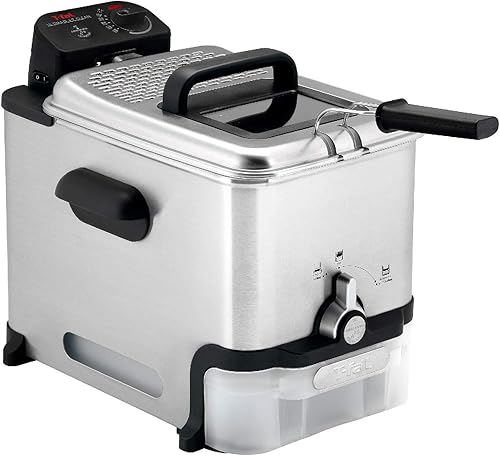
The Cosori is the air-fryer choice here; the T-fal and Chefman are deep fryers. Choose the cooking method before comparing their features.

Air fryer vs deep fryer: which suits your meals?
An air fryer suits a varied daily menu, while a deep fryer suits meals built around immersion frying. Write down the foods you'll cook most often before deciding which appliance deserves counter space.
If your list includes roasted vegetables, frozen sides, reheated pizza and breaded chicken, start with an air fryer. If it centers on battered fish, doughnuts and homemade onion rings, a deep fryer is the closer fit.
How does an air fryer differ from a deep fryer?
An air fryer moves heated air around food, while a deep fryer surrounds food with hot oil. The difference changes how coatings set, how food browns and what you must clean afterward.
Air frying relies on exposed surfaces and space for air to move. Deep frying relies on enough hot oil around the food, with room for bubbling and safe loading.
Neither method makes crowding harmless. A full basket can slow browning in an air fryer, while adding too much food at once can lower oil temperature in a deep fryer.
Who should skip each type?
Skip an air fryer if wet-battered food is your main goal. Changing a favorite immersion-frying recipe to work with hot air may require a different coating and won't give an identical crust.
Skip a deep fryer if you dislike storing, filtering or discarding cooking oil. Occasional fries alone may not justify that routine, especially if frozen oven-ready foods already meet your needs.
If you already have a convection oven, compare air fryers with convection ovens before adding another appliance. A smaller cooking chamber may be useful, but duplicated cooking jobs deserve a closer look.
Which makes better fries, chicken and battered food?
A deep fryer gives the closer match to traditional fried texture, while an air fryer works well for dry-coated foods and crisp reheating. Match the recipe to the appliance rather than expecting every fried food to translate unchanged.
| Food | Air fryer | Deep fryer |
|---|---|---|
| Frozen oven-ready fries | Useful for small batches; follow air-fryer directions | Use only if the package allows deep frying |
| Homemade fries | Dry well, coat lightly with oil and leave airflow gaps | Dry well and follow an immersion-frying recipe |
| Wet-battered fish | Use a recipe adapted for hot air | Suits batter designed to set in hot oil |
| Breaded chicken | Secure the coating and check internal doneness | Use suitable pieces and an immersion-frying recipe |
| Leftover pizza or breaded snacks | Useful for reheating and drying the surface | Usually unnecessary for reheating |
| Doughnuts | Requires an air-fryer recipe with different expectations | Suits traditional fried dough recipes |
With an air fryer, a light film of oil can help dry floury patches brown. More oil won't fix a crowded basket or make loose batter stay in place.
In a deep fryer, the crust can brown before thick food finishes cooking. For meat and poultry, use a food thermometer and the appropriate safe internal temperature rather than judging by color alone.
Let cooked food drain without piling it into a deep bowl. Trapped steam softens crusts, so a rack can help preserve texture while you finish the next batch.
Which uses less oil and costs less to run?
An air fryer needs less added cooking oil, but electricity use depends on power, preheating and total cooking time. Compare your full cooking routine rather than assuming either appliance always costs less.
Some frozen foods already contain oil and may need no extra coating. Fresh vegetables or homemade fries may benefit from a little, depending on the recipe.
A deep fryer needs a working oil bath even for a small serving. You can reuse suitable oil when the manual allows it, but repeated use and food debris affect its condition.
The Cosori is rated at 1725 watts; both deep fryers are rated at 1700 watts. Those similar figures don't establish equal energy use because cooking duration and heating cycles differ.
Factor oil replacement into your choice alongside electricity. Don't choose deep frying mainly for oil reuse if you rarely fry or won't keep up with oil care.
How much food can you cook at once?
Compare usable cooking space and food load, not just quarts or liters. An air-fryer basket volume and a deep fryer's oil capacity measure different things.
The Cosori has a 6 qt square basket. For foods that need a crisp surface, the area available for a loose layer matters more than how much food you can stack inside.
The T-fal holds 3.5 L of oil and specifies a food load of up to 2.65 lb. Treat that load as an upper limit, then follow the recipe and manual for each food.
The Chefman holds 4.5 L of oil, but the larger oil volume doesn't establish a larger food batch than the T-fal. Choose it for its frying features, rather than treating liters as a serving count.
Think about your whole meal, too. Cooking chicken and fries separately means managing 2 cooking times, and the first batch needs somewhere to wait without losing its crust.
For more help matching basket space to your meals, use the air-fryer buying guide. Counting the portions you normally serve is more useful than buying the largest number on the box.
How should you set up either fryer?
Set either appliance on a stable, heat-resistant counter with the required clearance. Check operating space, access to an outlet and room to handle food before filling or heating it.
The Cosori measures 14.4 in deep, 11.8 in wide and 11.9 in high. It needs 5 in of space behind and above it, plus enough room to pull out the basket.
The T-fal measures 18.3 in deep, 13.7 in wide and 14.8 in high. Make sure its position leaves room to load food and handle the basket without reaching across hot oil.
Wash the removable cooking parts as directed before first use, then dry them fully. Keep electrical housings out of water and follow the manual for any first-use heating steps.
Setting up an air fryer
Keep air vents clear and place the basket where it can open fully. Have a heat-safe landing spot ready so you don't need to carry a hot basket across the kitchen.
Follow the recipe and manual on preheating. The Cosori offers a selectable preheat function, so you can use it when the cooking instructions call for a hot start.
Setting up a deep fryer
Add suitable frying oil only to the manual's fill range, and keep water away from the oil tank. Dry fresh food well and remove loose surface ice from frozen food according to its cooking instructions.
Position cords away from counter edges and traffic. Once filled and heating, leave the fryer in place until it has cooled enough for safe handling.
Which mistakes cause soggy food or extra mess?
Overloading and using the wrong recipe cause avoidable problems in both appliances. Start with a manageable batch, then adjust based on browning and doneness.
Air-fryer mistakes to avoid
Don't pack food tightly to avoid making a second batch. Shake or turn suitable foods as directed, and separate pieces that stick together so hot air can reach their surfaces.
Don't pour loose wet batter into the basket. Choose a dry breading or an air-fryer recipe that explains how to keep the coating attached.
Don't assume a deep-fryer time and temperature will transfer directly. Follow air-fryer instructions, check food before the timer ends and adjust future batches based on the result.
Avoid covering the cooking surface in a way that blocks airflow. Any liner or accessory must fit the appliance and follow its use instructions.
Deep-fryer mistakes to avoid
Don't add a large load before the oil reaches the recipe's cooking temperature. Let it return to the target temperature between batches rather than rushing the next load.
Lower food carefully using the method in the manual. Dropping food into hot oil can cause splashing, while excess moisture can trigger vigorous bubbling.
Don't fill above the maximum line to cover a bulky piece of food. Oil rises when food enters, and bubbling needs space.
Stay nearby while either appliance cooks. If an air fryer starts smoking, stop and address the cause using the manual and our guide to why an air fryer smokes.
Which fryer is easier to clean and maintain?
An air fryer usually has the simpler after-meal routine because there's no oil bath to manage. A deep fryer adds cooling, oil care and tank cleaning to the work.
For an air fryer, let the cooking parts cool as directed, then remove crumbs and grease. Wipe accessible splashes from the cooled appliance so residue doesn't build up between meals.
Use soft cleaning tools on coated surfaces rather than scraping with metal. The Cosori's basket and crisper plate have a PFAS-free ceramic coating and are dishwasher safe.
For care beyond basic washing, read whether air-fryer baskets are dishwasher safe. Care instructions apply to individual parts, so don't assume the whole appliance can go in water.
With a deep fryer, wait until the oil reaches the handling temperature required by the manual. Never move a fryer full of hot oil to speed up cleanup.
Filtering removes food particles; it doesn't restore oil to its original condition. Replace oil according to the manual and sooner if it develops an unpleasant odor, unusual foaming or smoke at normal frying temperatures.
Keep stored oil in a suitable sealed container as directed. Dispose of cooled used oil through an accepted local method, and never pour it down a drain.
The T-fal helps with filtering and storage, while the Chefman's removable basket is dishwasher safe. Neither feature removes the need to clean grease from other approved surfaces.
Which of these fryers should you buy?
Choose the Cosori for daily versatility, the T-fal for repeated immersion frying with built-in oil handling, or the Chefman for fried snack sessions. Each solves a different cooking need.
Cosori TurboBlaze: for varied weekday meals
The Cosori is the sensible starting point if fried food is only part of your menu. Alongside air frying, it offers roasting, broiling, baking, drying and proofing modes.
Its temperature range is 90°–450°F, and it has 5 fan speeds. That range supports more cooking jobs than an appliance built mainly around an oil bath.
Choose it for vegetables, frozen sides and crisp reheating. Skip it if traditional wet batter is the reason you're shopping.
T-fal: for a regular deep-frying routine
The T-fal suits cooks who want traditional fried food and expect to reuse suitable oil. Its system automatically filters oil into a sealed storage container when used as directed.
Temperature control runs from 300°–375°F. A locking lid, viewing window, cool-touch handles and automatic shut-off support operation, but you still need to remain nearby and follow hot-oil precautions.
Choose it when oil handling is the main obstacle to frying more often. Skip it if you want cleanup to end with washing a basket.
Chefman: for batches of fried appetizers
The Chefman suits planned sessions of fried snacks, such as onion rings or mozzarella sticks made with suitable recipes. Its adjustable temperature control and timer help you manage successive batches.
The basket clips to the side for draining, and the lid has a viewing window. A magnetic breakaway cord is another useful feature around a countertop appliance.
Choose it if those controls and draining steps fit your routine. Pick the T-fal instead if built-in oil filtration and storage are your priority.
Your air fryer vs deep fryer decision
Buy an air fryer when varied meals and simple oil cleanup lead your priorities. Buy a deep fryer when the foods you want depend on immersion frying and you'll accept the oil-care routine.
Before ordering, name 3 meals you'll make regularly and check where the appliance will sit during use and cooling. If you can't name those meals, start with whether an air fryer is worth it before committing counter space.
For the air-fryer route, choose the Cosori among these options. For deep frying, choose the T-fal for oil filtration or the Chefman for its timer and draining basket.
You can find more help with the rest of your setup in the guides and accessories hub.
Frequently asked questions
Is an air fryer healthier than a deep fryer?
An air fryer usually needs less added oil than a deep fryer, which can reduce the oil used to prepare a meal. It doesn't make every food a healthy choice.
Ingredients, portion size and how often you eat fried foods still matter, so compare the whole meal rather than the appliance alone.
Does an air fryer make food as crispy as a deep fryer?
An air fryer can make food crisp, but it doesn't copy every deep-fried texture. Hot air works well with many dry coatings and frozen foods, while hot oil sets wet batter around food.
Keep air-fryer batches loose enough for airflow and choose recipes written for the cooking method.
Which is easier to clean, an air fryer or deep fryer?
An air fryer generally involves less cleanup because there's no oil bath to filter, store or discard. The Cosori has dishwasher-safe cooking parts, while the Chefman's basket is dishwasher safe.
The T-fal helps with oil handling through filtration and sealed storage, but its cooking surfaces still need cleaning.
Can you use an air fryer instead of a deep fryer?
You can replace deep frying with air frying for many breaded foods, frozen snacks and fries, provided you use suitable cooking instructions. Loose wet batter needs a different approach because it can drip before setting.
Expect a browned, crisp surface rather than an exact copy of an oil-fried crust.
Which is better for cooking a large batch?
Compare usable food capacity and batch spacing before choosing either type. The T-fal specifies up to 2.65 lb of food, while the Chefman's larger oil volume doesn't establish a larger food load.
An air-fryer basket also needs room for airflow, so its full volume isn't usable for every recipe.


